
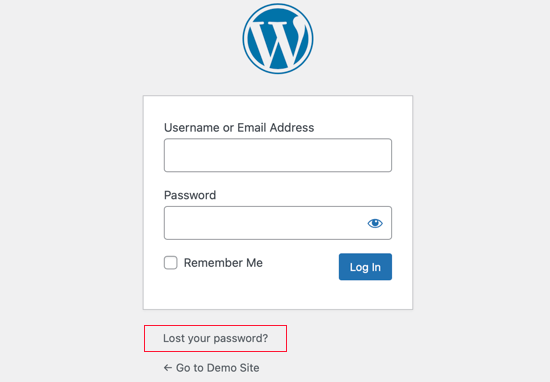
Losing access to your WordPress admin panel can feel like a nightmare, especially if your site plays a critical role in your business or personal brand. While the default “Lost your password?” option on the login page usually helps, it doesn’t always work.
Sometimes, your website fails to send recovery emails, or you no longer have access to the email address linked to your account. In some cases, issues like a WordPress slow dashboard or plugin conflict can make login attempts even more frustrating.
That’s where phpMyAdmin comes in as a powerful fallback tool to reset your WordPress password directly from the database. In this comprehensive guide, we’ll walk you through every step, address security concerns, and share modern alternatives. Whether you’re a beginner or a seasoned admin, this guide will equip you with practical solutions.
Table of Contents
phpMyAdmin is a reliable fallback when traditional password recovery fails. Here’s when it’s essential:
In all these cases, phpMyAdmin helps you restore access and control over your WordPress admin dashboard.
WordPress stores user credentials in the wp_users table of its MySQL database. The user_pass column contains your password in a hashed format. Historically, WordPress used MD5 hashing, but it now uses stronger encryption (e.g., bcrypt via wp_hash_password() function).
When you reset your password manually and hash it with MD5, WordPress will automatically rehash it with the updated algorithm after your next login. However, this technique should be used only as a temporary workaround.
For added protection:
Before diving into database editing, ensure you:
Security Note: Editing your database directly is risky. Mistakes can break your site or expose it to vulnerabilities.
Resetting your WordPress password directly through the database using phpMyAdmin is a reliable method when the usual recovery options don’t work. Follow this step-by-step guide carefully to avoid mistakes.

Start by logging in to your hosting provider’s control panel (like cPanel, Plesk, or a custom dashboard). Look for a section labeled Databases and click on the phpMyAdmin icon. This tool allows you to manage your WordPress site’s database without coding.

Once inside phpMyAdmin, you’ll see a list of databases in the left sidebar. If your hosting account has multiple installations, make sure to select the database that corresponds to your WordPress site. Not sure which one? You can find it in the wp-config.php file of your WordPress root directory under DB_NAME.

Within the selected database, locate the wp_users table. (Note: If you’ve changed the default table prefix for security reasons, the table might be named something like xyz_users.) Click on Browse to view the users registered on your site.

Look for the row associated with your admin account. It will typically have the username admin, your display name, or the email address you used during setup. Click the Edit link (pencil icon) on that row to make changes.

In the edit interface, locate the user_pass field, which stores the hashed password.
Now follow these steps precisely:
Note: WordPress uses stronger encryption than MD5 in current versions. However, MD5 is still supported for backward compatibility. After your next login, WordPress will automatically rehash your password using a more secure algorithm.
Now visit your WordPress login page (yourdomain.com/wp-login.php) and enter your username and the new password you just set. You should be able to log in successfully.
Security Reminder:
While this method is effective for emergency access, it’s not recommended for regular use. Always prioritize secure methods like recovery email links or trusted plugins for password management. Consider enabling two-factor authentication and enforcing strong passwords for all users to enhance overall site security.
While phpMyAdmin works, it’s not always the safest option. Consider these alternatives:
WP-CLI Command:
wp user update admin– user_pass=”newsecurepassword”
functions.php Snippet:
function wpb_reset_password() {
$user = get_user_by(‘login’, ‘admin’);
wp_set_password(‘newsecurepassword’, $user->ID);
}
add_action(‘init’, ‘wpb_reset_password’);
These methods are safer and better integrated with WordPress’s core security systems.
Always double-check before saving anything in phpMyAdmin.
Once you regain access, make your WordPress site more secure:
If you notice that your WordPress dashboard is slow post-reset, it may not be related to the password reset directly. However, it’s a good time to:
Improving admin speed enhances user experience and productivity.
Resetting your WordPress password via phpMyAdmin is an essential skill for any WordPress admin. Still, it should only be used in emergencies. Always prefer native WordPress tools, secure plugins, or developer-level options like WP-CLI when possible.
After regaining access, bolster your site’s security, review users, and audit admin activity. If your site was compromised, consider restoring from backup or running a malware scan.
You may want to see our guide on regenerating permalinks in WordPress. You may also want to see the list of 13+ signs that your WordPress is hacked and how you can fix them.
There are several reasons why the password recovery email may not reach your inbox:
In such cases, phpMyAdmin provides a direct way to manually reset your WordPress password from the database.
Yes, it’s safe if you follow best practices, such as:
However, this method is best used only in emergencies.
Check whether your WordPress installation uses a custom database prefix. The table may be named wp6_users or customprefix_users. You can verify the exact prefix in your site’s wp-config.php file by looking for:
$table_prefix = ‘yourprefix_’;
Yes. As long as you have access to phpMyAdmin, you can reset the password for any user account listed in the wp_users table. Just locate the user by their user_login or user_email, then follow the same MD5 hash method.
It doesn’t anymore. WordPress used MD5 hashing before version 2.5. Today, stronger encryption (like bcrypt) is used. However, phpMyAdmin only supports MD5 directly, and WordPress will rehash your password securely once you log in with an MD5-hashed password.
Some modern and safer options include:
These options are especially useful if you’re concerned about regular admin users or enforcing policies like WordPress password expiration or forcing password changes.
Use a WordPress strong password plugin or a password strength meter integrated into your login or user profile form. Strong passwords should include:
Not directly. However, if your WordPress dashboard is slow, the issue could stem from:
After regaining access, it’s a great time to clean up your backend using tools like WP-Optimize and switch to lightweight dashboard templates.
You can enforce security policies using plugins that:
Look into WordPress login security and password expiration plugins to automate this process.
Just fill out the contact form for a free consultation from our expert. We would be happy to answer you.
ThemeLooks – YouTube – Facebook – Linkedin – Twitter
At ThemeLooks Ltd, We develop SEO-optimized content that helps users understand and connect with our themes, templates, plugins, and services. From writing product descriptions to detailed guides, We turn features into clear, helpful content that boosts visibility and drives engagement, making sure each solution we offer reaches the right audience at the right time.
